The Great Molasses Flood of 1919: The Day Boston Drowned in Syrup
In January 1919, a wall of molasses 15 feet high tore through a city street at 35 miles per hour. It sounds absurd. It was horrifying. This is the great molasses flood.
History is full of disasters that defy imagination. Plagues, fires, floods, wars. But few are as bizarre, as visceral, or as strangely fascinating as what happened in Boston on the afternoon of January 15th, 1919. On that day, one of the most unusual industrial catastrophes in American history unfolded in broad daylight, and the city paid for it in the stickiest, most suffocating way imaginable.
This is the story of the Great Molasses Flood.
The Tank
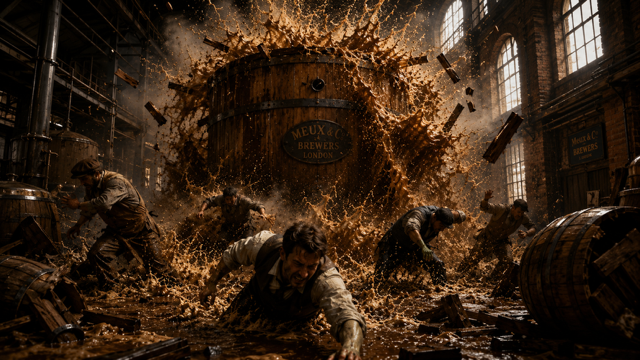
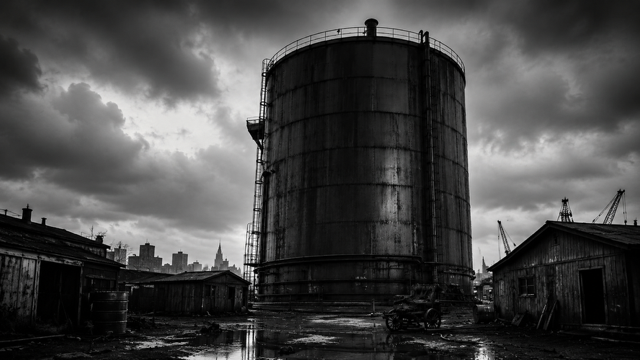
Standing in Boston’s North End neighbourhood was a steel storage tank owned by the United States Industrial Alcohol Company. This was a structure that had no business being as large as it was. Fifty feet tall. Ninety feet in diameter. Holding roughly 2.3 million gallons of thick, dark molasses.
The tank was built quickly, built cheaply, and built badly. Workers reportedly noticed it leaked so severely that local children would scrape molasses off the sides with buckets and the company let them, preferring silence over scrutiny. Structurally, it was a disaster waiting to happen.
The Rupture
Shortly after 12:30 in the afternoon, residents of Commercial Street heard a sound unlike anything they could explain. A deep metallic groan. Then a crack. Then an explosion of noise as rivets shot through the air like bullets and the steel walls peeled outward.
What followed happened in seconds.
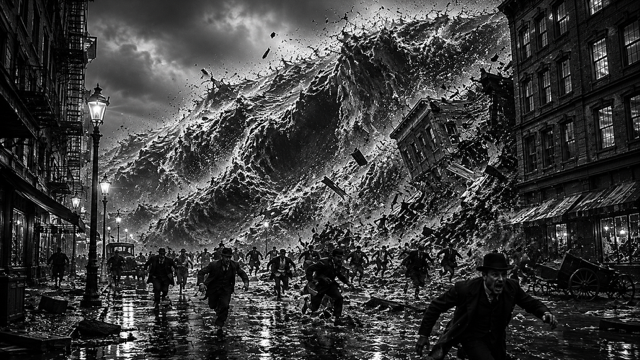
A 15-foot wall of molasses which some witnesses described it as 40 feet at its peak, surged into the streets at an estimated 35 miles per hour. Moving at that speed, molasses is not a liquid you can outrun. It is not something you can push through. It grabs. It holds. It suffocates.
Telegraph poles snapped. Freight wagons were flung aside. An elevated railway support structure which was made from solid steel buckled and broke under the pressure. A Boston firehouse was lifted clean off its foundations. Buildings collapsed. Horses were swept away and drowned. People were struck, pinned, and pulled under.
The Horror of the Rescue
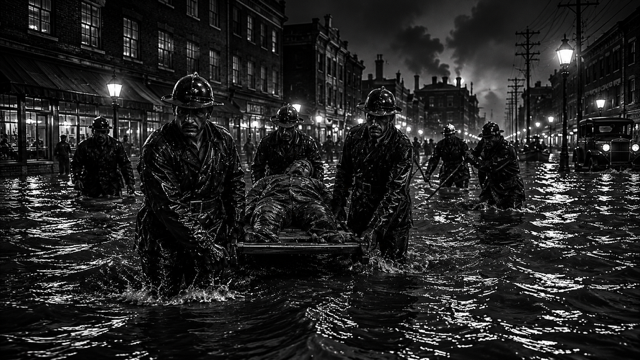
Emergency workers arrived quickly. What they found was almost impossible to work in.
The molasses had begun to cool and thicken, turning the streets into something like quicksand. Divers sent into the flood to search for survivors couldn’t see anything. They had to feel their way through the dark syrup by touch alone, barely able to move, hoping their hands would find a person still breathing.
In the end, 21 people were killed. They were all ranging in age from 10 to 78. Around 150 more were injured. The Boston Post wrote that horses had died “like so many flies on sticky fly paper.” The rescue operation lasted four full days.
The Aftermath and the Smell
Cleanup took weeks. Fire crews pumped salt water through the streets to thin the molasses, which eventually washed into Boston Harbour, turning it brown for days.
The legal aftermath was equally drawn out. Over 100 plaintiffs joined what became one of the first major class-action lawsuits in Massachusetts history. After years of testimony from more than 1,000 witnesses, the court ruled in 1925 that the company was liable and a result of poor design and gross negligence. The victims and their families were awarded the equivalent of around eight million dollars in today’s money.
The disaster also helped shape American engineering and construction safety standards in ways that still exist today.
But perhaps the strangest legacy of all? For decades afterward, locals claimed that on hot summer days, you could still smell it. A faint, sweet, eerie scent rising from the stones of Commercial Street. This was a reminder that history doesn’t always leave behind ruins you can see. Sometimes it leaves behind ones you can only sense and smell.
The Great Molasses Flood is one of those stories that sounds too strange to be true and yet it is meticulously documented, photographed, and litigated. It is a reminder that disaster can come in the most unexpected forms, that corporate negligence has real human cost, and that the past has a way of clinging to places long after the cleanup crews have gone.
If you found this fascinating, subscribe to or follow After Eden on the social links below for more forgotten moments that history almost swallowed whole.
If you found this interesting, you may also enjoying reading about The Carrington Event: The Solar Storm That Could End Modern Civilisation, and how if this event were to repeat, what the impact would be.
Also if you like this, you may also be interested in AFTER EDEN — ANCIENT WORLDS. FORGOTTEN TRUTHS. ETERNAL QUESTIONS.